
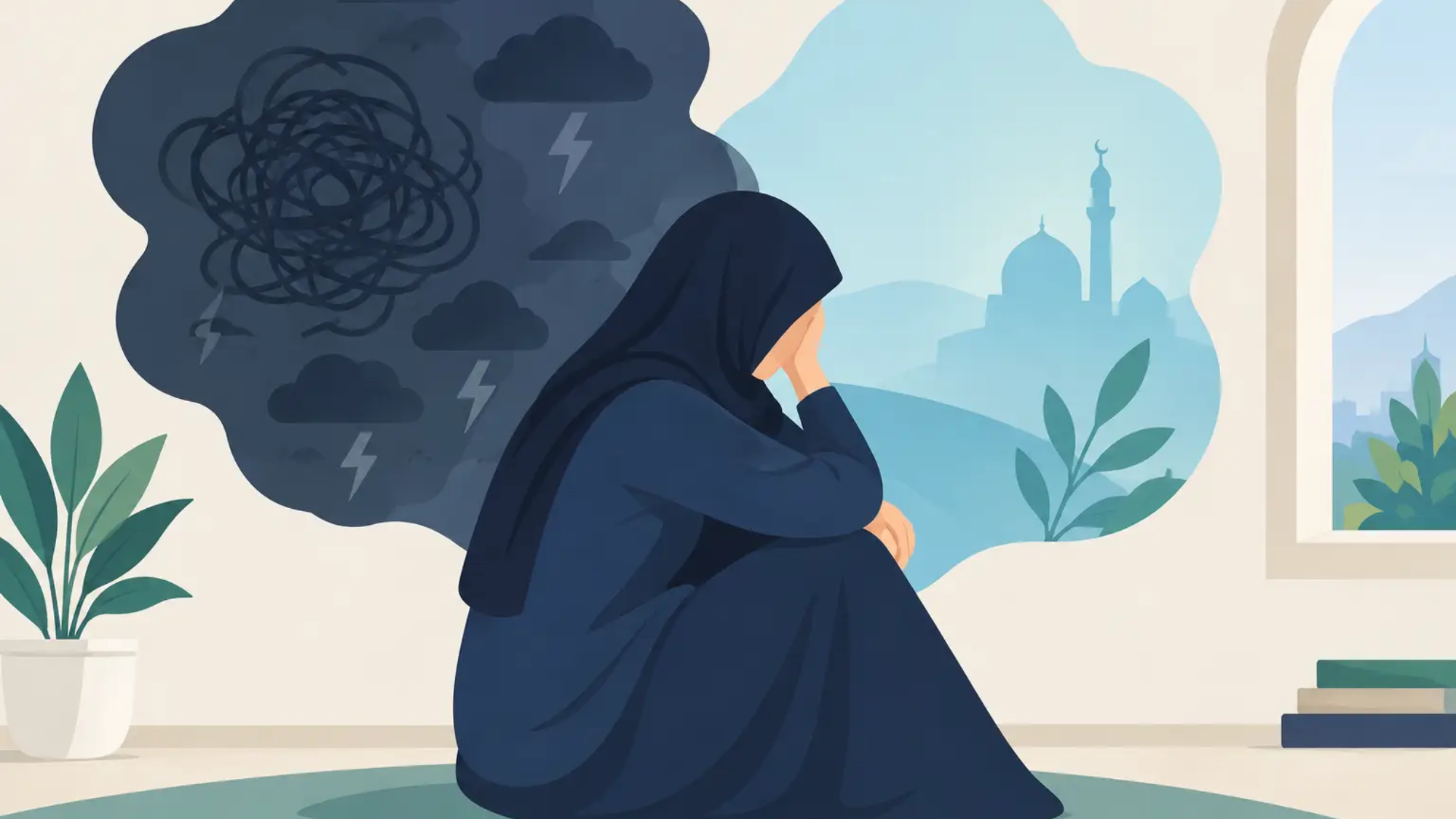
A panic attack is usually not medically dangerous, even when it feels terrifying. But panic attack danger should never be dismissed when symptoms are new, severe, unusual for you, or could point to a medical emergency.
Many women describe panic as a sudden certainty that something catastrophic is happening: “I cannot breathe,” “I am having a heart attack,” or “I am going to lose control.” That fear is real. It deserves calm, informed care rather than shame, spiritual minimizing, or pressure to simply push through it.
What does panic attack danger actually mean?
A panic attack is a sharp surge of fear and physical alarm. The body’s threat system activates quickly, often without a visible external danger. Your heart may race, your chest may tighten, you may sweat, shake, feel dizzy, experience nausea, or feel detached from yourself or your surroundings.
These sensations can be intense because the body is preparing for survival. Adrenaline increases alertness. Muscles tighten. Breathing can become fast or shallow. When a person begins monitoring every sensation and interpreting it as proof of danger, fear can rise even further.
Panic itself is not usually harmful to the heart, lungs, or brain. It does not mean you are “going crazy,” weak in faith, or incapable of coping. At the same time, the symptoms of panic can overlap with symptoms of medical conditions. That is why it is wise to take a first episode, a changed pattern, or concerning symptoms seriously.
When should you seek urgent medical care?
Do not assume that chest pain, trouble breathing, fainting, or neurological symptoms are panic, particularly if they are new or different from what you have felt before. Seek emergency evaluation or call 911 in the United States if you have symptoms such as:
- chest pressure, pain, or discomfort that is severe, persistent, or spreading to the arm, jaw, back, or shoulder
- fainting, severe shortness of breath, blue lips, or a sudden irregular heartbeat
- new weakness, numbness on one side, confusion, trouble speaking, or a severe sudden headache
- symptoms after an allergic reaction, overdose, injury, or substance use
- thoughts of harming yourself or inability to stay safe
This is not about becoming more afraid of your body. It is about giving physical symptoms appropriate medical attention. Once urgent causes have been evaluated, you and your health care team can better understand whether panic, another anxiety concern, a medical condition, or more than one factor may be involved.
Why can a panic attack feel so physically dangerous?
Panic is often fueled by a frightening loop: a body sensation appears, the mind predicts catastrophe, fear increases the sensation, and the prediction feels confirmed. A skipped heartbeat may become “Something is wrong with my heart.” Lightheadedness may become “I will faint.” Feeling unreal may become “I am losing my mind.”
Rapid breathing can add to this cycle. It may lower carbon dioxide levels and contribute to tingling, dizziness, chest discomfort, and a sense of unreality. These sensations are alarming, but they are common in panic.
The goal is not to argue yourself into feeling perfectly safe. Trying to gain total certainty can become another form of struggle. A steadier approach is to acknowledge what is happening: “My alarm system is activated. This feeling is intense. I can take the next wise step.”
For a Muslim woman, panic can carry an additional layer of fear: “Why am I not calmer if I trust Allah?” Faith is not measured by the absence of adrenaline. The Qur’an tells us, “Surely in the remembrance of Allah do hearts find comfort” (Qur’an 13:28). Comfort may come through dhikr, du’a, community, rest, medical assessment, and skilled therapy. These are not competing paths.
Can repeated panic attacks damage your body?
Repeated panic attacks can be exhausting. They may disrupt sleep, concentration, appetite, work, parenting, worship, or the willingness to leave home. Some people begin avoiding exercise, driving, crowds, masjid spaces, travel, or any place where they fear they could panic.
Avoidance can make life smaller, even when it brings short-term relief. The body learns, “I escaped, so the place or sensation must have been dangerous.” Over time, the fear may become less about the original symptoms and more about the possibility of having symptoms again.
That pattern can be treated. The National Institute of Mental Health describes psychotherapy, including cognitive behavioral therapy, as a well-supported treatment approach for panic-related concerns. The NICE guideline on panic disorder also supports cognitive behavioral interventions, including exposure-based work, as part of care.
A qualified clinician can help you distinguish between reasonable medical caution and fear-driven avoidance. Therapy does not ask you to ignore genuine health needs. It helps you respond to anxiety without letting anxiety become the sole decision-maker.
What can you do during a panic attack?
First, orient to the present. Place both feet on the floor or notice the surface beneath you. Name a few objects you can see. Feel the temperature of the room. These small details tell the nervous system that you are here, not inside the catastrophe your mind is predicting.
Next, soften your breathing rather than forcing a huge breath. Let the exhale become a little longer and gentler. If counting helps, breathe in comfortably and breathe out slowly. The purpose is not to perform the exercise perfectly. It is to reduce the struggle with the sensations.
Then use a brief, truthful statement: “This is a wave of panic. It will rise and fall.” You can pair that statement with a simple dhikr or du’a that feels grounding. Do not turn dhikr into a test you must pass to prove that you are safe. It can be a compassionate return to Allah while your body settles.
If checking your pulse, searching symptoms online, repeatedly seeking reassurance, or immediately leaving situations has become a regular pattern, gently notice it. These actions may relieve fear briefly while teaching the brain that panic is too dangerous to tolerate. A therapist can help you reduce safety behaviors at an appropriate pace.
When is therapy helpful for panic attack danger?
Therapy is worth considering when panic attacks recur, you are avoiding parts of life, or fear of another attack is taking up significant mental space. Cognitive behavioral therapy for panic often includes learning how anxiety works, changing catastrophic interpretations, and gradually facing feared sensations or situations with support.
For women with trauma histories, panic can also be connected to a nervous system shaped by past threat. In those situations, trauma-focused approaches may be appropriate. For PTSD, the VA/DoD clinical practice guideline names Prolonged Exposure, Cognitive Processing Therapy, and EMDR among recommended treatments. The best approach depends on your symptoms, history, current safety, and goals.
If panic is entangled with intrusive thoughts, compulsive reassurance, or waswasa that feels impossible to disengage from, an OCD assessment may also be useful. ERP is the first-line psychotherapy for OCD. EMDR and IFS may be helpful for co-occurring trauma when clinically indicated, but they are not OCD treatments themselves.
You can learn more through Manara Counseling’s Anxiety Help page, read the related article on waswasa and OCD, or visit the Appointments page to explore whether online therapy is a fit. Therapy is available to clients located in Florida, Texas, Michigan, Virginia, New Hampshire, South Carolina, or Vermont at the time of session.
FAQ
Are panic attacks dangerous to the heart?
Panic attacks are not generally considered to cause heart attacks. However, chest symptoms can have many causes, so new, severe, or unusual symptoms should be medically evaluated rather than assumed to be anxiety.
Can a panic attack make you faint?
Many people feel faint during panic, often because of changes in breathing and blood flow. Actual fainting is less common, but loss of consciousness or repeated near-fainting deserves medical attention.
Is panic a sign of weak iman?
No. Panic is a mind-body alarm response, not a measure of your worth or devotion. Islamic spiritual practices can support healing, and clinical treatment can help you work with the patterns that maintain fear.
What is the best therapy for panic attacks?
Cognitive behavioral therapy with exposure-based methods has strong evidence for panic. The right plan may also address trauma, depression, OCD, chronic stress, or medical factors when they are part of the picture.
You do not have to wait until fear has taken over every corner of your life. Seeking wise support can be one form of honoring the amanah of your mind, body, and heart before Allah.
This article is for education and is not therapy. If you are in danger, call 988 in the US or your local emergency number.

Leave Your Comment
You must be logged in to post a comment