
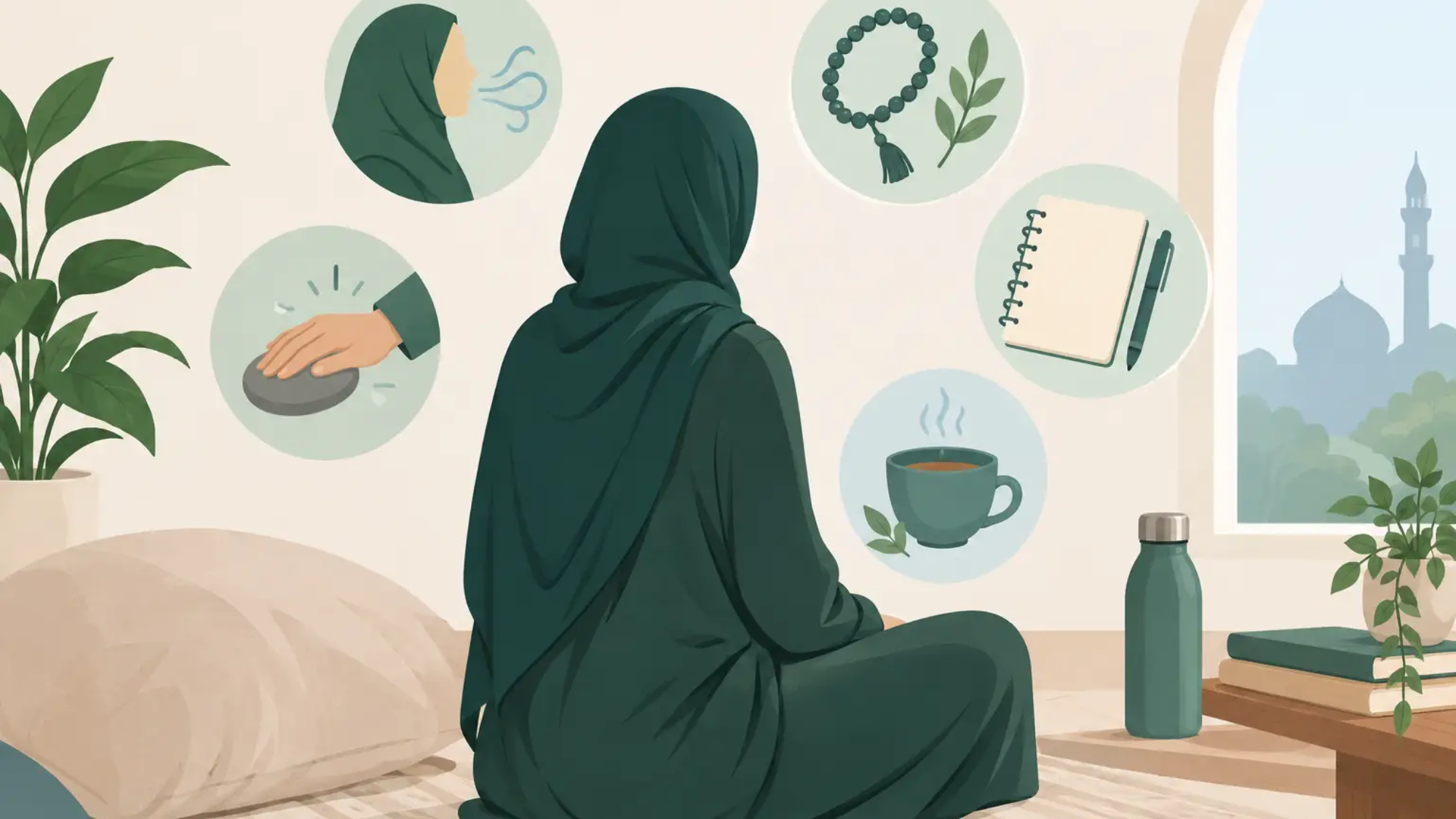
A panic surge can make a familiar room feel unsafe, a quick heartbeat feel catastrophic, and a passing thought feel like a warning you cannot ignore. In that moment, the best coping tools for panic are not about forcing yourself to calm down perfectly. They help you recognize what is happening, support your nervous system, and remain connected to the truth that fear is present but not in charge.
For Muslim women, panic can carry an additional layer of distress. You may worry that your iman is weak, feel guilty that you cannot focus in salah, or wonder why du’a does not make the symptoms disappear immediately. Panic is not proof of spiritual failure. It is a whole-body alarm response, and it deserves both compassionate care and clinically sound treatment.
What Panic Is Asking Your Body to Do
Panic often arrives with intense physical sensations: racing heart, breathlessness, dizziness, trembling, nausea, chest tightness, numbness, or a frightening sense that you are losing control. The body has activated its threat system. It is trying to protect you, even when there is no immediate danger to escape.
The difficult part is the interpretation. When you read a rapid heartbeat as evidence that something terrible is happening, fear rises further. Your body then produces more sensations, which seem to confirm the fear. This cycle can move very quickly.
A coping skill interrupts the cycle without demanding that you prove you are completely safe. The goal is more modest and more powerful: to help your body learn that discomfort can be experienced without an emergency response.
If chest pain, fainting, new neurological symptoms, or severe breathing difficulty are new or concerning, seek urgent medical evaluation rather than assuming it is panic. Once medical causes have been assessed, a therapist can help you address recurring panic with greater precision.
Best Coping Tools for Panic in the Moment
Name the experience with gentleness
Try saying, quietly and plainly: “This is panic. My nervous system is activated. These sensations are intense, and they will pass.” Naming panic is not denial. It is a way of giving your mind an accurate frame when it is searching for danger.
Avoid arguing endlessly with every fearful thought. During a surge, your task is not to win a debate with anxiety. It is to notice the thought, recognize the alarm, and return your attention to the next grounded action.
Let your exhale become longer
Panic can lead to fast, shallow breathing or attempts to take huge breaths. Instead, breathe gently through the nose if that is comfortable, and allow the exhale to be a little longer than the inhale. For example, inhale softly for three counts and exhale for five. Continue for a minute or two without straining.
This is not a test you can fail. If counting makes you more anxious, release the numbers and simply let your shoulders soften on the out-breath. The purpose is to offer your body cues of safety, not to control every sensation.
Orient to the room you are actually in
Panic pulls attention inward, toward the body and its possible dangers. Orientation gently returns attention to the present environment. Look around and identify the color of three objects. Feel your feet meet the floor. Notice one sound near you and one sound farther away. Describe the room in concrete terms: the window, the fabric of a chair, the temperature of the air.
This may sound simple, but it is a neurobiological intervention. You are showing the threat system evidence that you are here, now, rather than inside the catastrophic future panic is predicting.
Use temperature and movement wisely
Cool water on the face, holding a cold drink, or stepping into cooler air may help settle acute arousal for some people. Slow walking, pressing your palms together, or gently pushing your feet into the ground can also discharge some of the mobilized energy in the body.
Choose movement that feels stabilizing, not frantic. Repeatedly checking your pulse, pacing for reassurance, or escaping every situation at the first sensation of anxiety can unintentionally teach the brain that the sensations were dangerous. There is a meaningful difference between caring for your body and obeying panic’s demands.
Bring in dhikr as an anchor, not a performance
A short phrase of remembrance can give the heart somewhere steady to rest: SubhanAllah, Alhamdulillah, Allahu Akbar, or Hasbunallahu wa ni’mal wakeel. You do not need to feel emotionally composed for dhikr to matter. You do not need to repeat it until panic disappears.
Try pairing a phrase with a slow exhale, allowing it to be an act of turning toward Allah in the middle of hardship. Faith-grounded coping is not a demand to become calm on command. It is a reminder that you are held by Allah even while your body is unsettled.
What Can Make Panic Stronger
Many people respond to panic in ways that make perfect sense but keep the cycle alive over time. Constant body scanning, repeated online symptom searches, asking loved ones for reassurance again and again, and leaving every feared place can provide immediate relief. The trade-off is that your brain may learn that panic needed to be escaped.
Caffeine, skipped meals, poor sleep, dehydration, and chronic overextension can also lower your threshold for panic. This does not mean you caused your anxiety or can solve it through lifestyle changes alone. It means practical care for your body can make therapeutic work more accessible.
For women dealing with OCD or religious scrupulosity, it is especially important to distinguish dhikr and du’a from compulsions. Repeating a religious phrase to neutralize a feared thought or obtain absolute certainty may bring temporary relief while feeding OCD. A therapist who understands both ERP and Islamic practice can help you preserve sincere worship without allowing anxiety to turn it into a ritual of fear.
Build a Plan Before the Next Wave
Panic is harder to navigate when you must invent a response while terrified. Create a brief panic plan when you are relatively calm. Keep it on your phone or in a small note where you can find it easily.
Your plan might include a grounding statement, your preferred breathing approach, one dhikr phrase, and the name of a person you can contact for steady support. It can also include one brave action you will take instead of avoiding the situation completely, such as remaining in the grocery store for two additional minutes or sitting through the first part of a meeting.
The aim is not to make every panic episode disappear. It is to build trust in your capacity to move through one. Each time you stay present with a sensation, use a skill, and allow the wave to rise and fall, you offer your nervous system new learning.
When Therapy Is the Right Next Step
Occasional panic can happen during seasons of major stress, grief, illness, or exhaustion. Recurrent panic attacks, fear of future attacks, avoidance of driving or public places, sleep disruption, or changes to work and relationships deserve more support than self-help alone can provide.
Evidence-based treatment for panic may include cognitive behavioral therapy, acceptance and commitment therapy, exposure-based work, and treatment for underlying trauma when relevant. Treatment does not require you to become detached from faith or to explain Islamic practices to someone who misunderstands them. For many Muslim women, healing deepens when clinical care honors both the nervous system and the soul’s longing to return to Allah with honesty.
At Manara Counseling, therapy can hold both realities: panic is a treatable psychological pattern, and your life is more than a collection of symptoms. You are not weak for needing support. You are responding to a burden that may have been carried alone for too long.
When panic comes, begin with one small act of steadiness: feel the ground, lengthen one exhale, and remind yourself that this wave does not define your future. Allah sees the effort that no one else can see, including the quiet courage it takes to stay present.

Leave Your Comment
You must be logged in to post a comment