
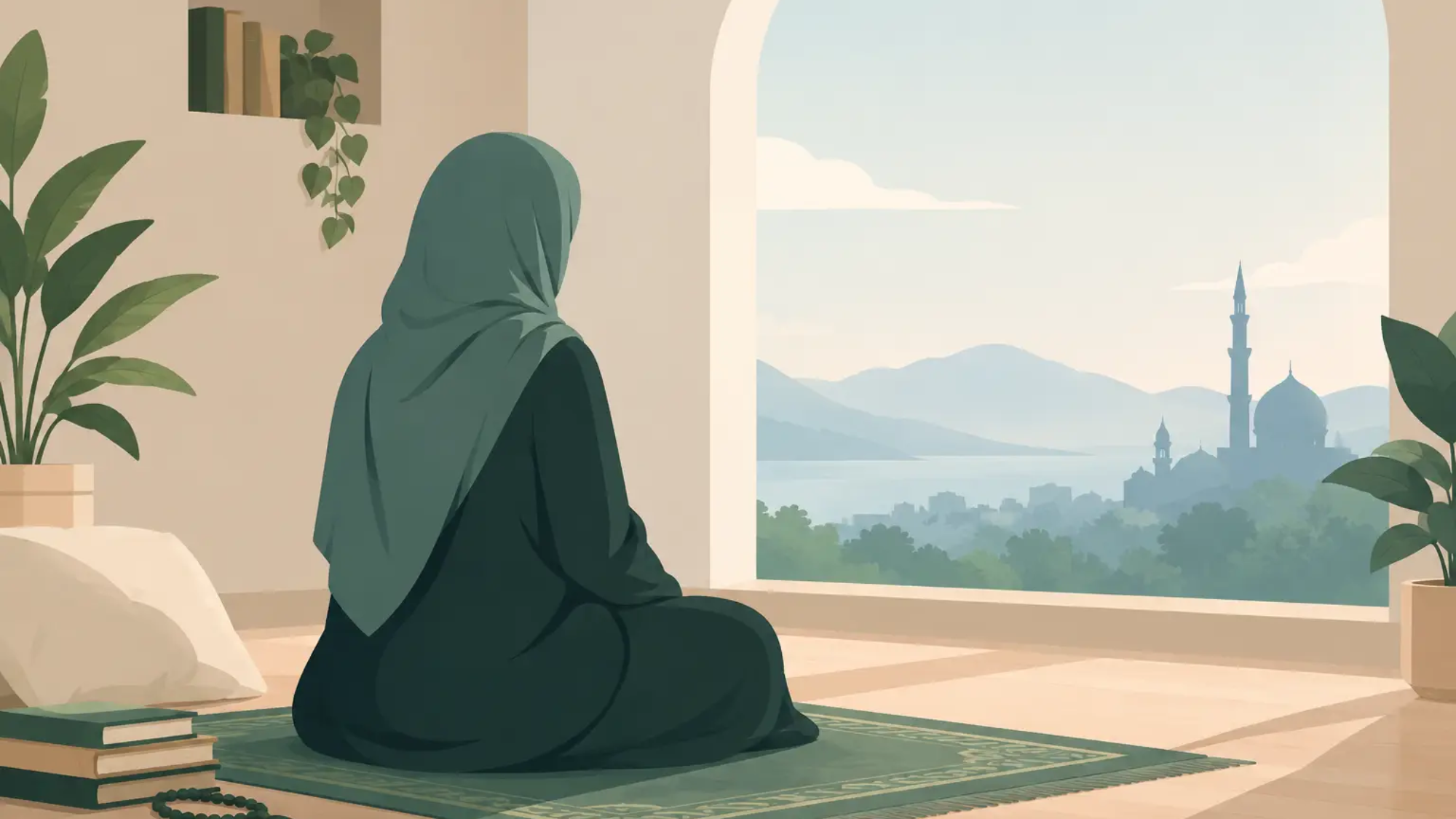
A woman can be praying, caring for her family, meeting every deadline, and still feel her body tense at a familiar tone of voice. She may know that what happened is over, yet her nervous system continues to act as if danger is near. Trauma recovery begins with taking this reality seriously. It does not require minimizing the pain, performing gratitude, or choosing between sound mental health care and devotion to Allah.
For many Muslim women, trauma is complicated by what followed the original wound: being told to be patient without being protected, being urged to forgive before they had space to grieve, or wondering whether their symptoms reflect weak faith. These messages can add shame to an injury that already deserves care. Faith can be a profound source of meaning and steadiness, but it should never be used to deny what the mind and body have endured.
What Trauma Can Look Like Beyond the Event
Trauma is not defined only by what happened. It is also shaped by how the experience was held, whether support was available, and what the nervous system learned it had to do to survive. A single event, such as an assault, accident, sudden loss, or medical crisis, can be traumatic. So can prolonged exposure to emotional abuse, family instability, racism, coercive control, spiritual manipulation, or repeated experiences of being dismissed when help was needed.
Not everyone has flashbacks. Sometimes trauma appears as a constant need to stay productive, an inability to rest, emotional numbness, people-pleasing, irritability, panic, nightmares, chronic muscle tension, or a harsh inner voice that never lets up. Some women notice that they become overwhelmed by conflict, avoid particular places or conversations, or feel detached from their own lives.
These patterns are not proof that you are broken. They are often intelligent survival responses that outlived the conditions that created them. Your body may have learned to fight, flee, freeze, submit, disconnect, or stay endlessly alert because those responses once helped you get through something unbearable.
Trauma Recovery Starts With Safety, Not Pressure
A common misunderstanding is that healing means telling the whole story immediately. In reality, effective trauma therapy is paced. Before processing painful memories in depth, a clinician helps establish enough present-day safety and stability for the work to be tolerable.
This may include learning how to recognize activation in the body, practicing grounding skills, improving sleep where possible, setting boundaries, and identifying the people and environments that genuinely support safety. It may also mean addressing depression, panic, dissociation, chronic pain, or obsessive-compulsive symptoms alongside trauma. These concerns frequently overlap, and treatment should reflect the full picture rather than forcing every experience into one label.
Safety does not mean life must become perfectly calm before therapy can begin. Few people have that luxury. It means developing a reliable way to return to the present when the past becomes loud. It means having choice in the therapy room, including the choice to slow down, pause, or name when something feels too much.
For Muslim women, safety can also include being understood without having to explain why modesty, family ties, community belonging, worship, and religious responsibility matter. Culturally responsive care does not assume that faith is either the cause of distress or an irrelevant side note. It asks how faith is functioning in this particular woman’s life: as comfort, conflict, longing, refuge, or sometimes all of these at once.
How Evidence-Based Therapy Supports Healing
There is no single best approach for every person. The right treatment depends on the nature of the trauma, current symptoms, personal preferences, practical circumstances, and whether there are ongoing safety concerns. A thoughtful therapist will not simply select a modality and apply it mechanically.
EMDR, or Eye Movement Desensitization and Reprocessing, can help the brain reprocess distressing memories that remain emotionally and physically charged. Cognitive Processing Therapy and Written Exposure Therapy can help clients examine trauma-related beliefs, particularly beliefs such as “I am unsafe everywhere,” “It was all my fault,” or “I cannot trust my own judgment.”
Some women benefit from Internal Family Systems-informed work, which gently explores the protective parts of the self that may be carrying fear, anger, perfectionism, or numbness. Acceptance and Commitment Therapy can help a person make room for difficult internal experiences while choosing actions rooted in her values. CBT and DBT skills can strengthen emotion regulation, distress tolerance, and practical coping when daily life feels unmanageable.
The goal is not to erase memory or make a person indifferent to what happened. Trauma treatment aims to reduce the grip the past has on the present. A memory may remain sad or unjust, but it no longer has to dictate every relationship, decision, or bodily response.
Faith Is Not a Shortcut Around Pain
Islamic spiritual grounding can be deeply restorative in trauma recovery when it is offered with care and knowledge. It can reconnect a woman with meaning when trauma has made the world feel chaotic. It can make room for lament, du’a, mercy, accountability, and hope in Allah’s justice. It can remind her that her worth was never determined by what another person did to her.
But faith should not be made into a demand to silence the nervous system. Salah and dhikr can be sources of regulation and closeness to Allah, yet they are not a replacement for specialized treatment when trauma symptoms are significant. Likewise, sabr is not passive endurance of harm. It does not require remaining in unsafe conditions or refusing support.
A faith-integrated therapist can help distinguish between healthy spiritual conviction and trauma-driven fear that has borrowed religious language. For example, a woman with intrusive thoughts may fear that she is sinful simply because a thought appeared in her mind. A woman who has experienced betrayal may interpret her difficulty trusting people as a failure in tawakkul. These concerns deserve clinical precision and religious fluency, not quick reassurance.
Healing may include rebuilding a relationship with worship that feels gentle rather than performative. It may mean allowing yourself to make du’a with tears, to ask difficult questions, and to approach Allah as you are rather than as you think a suffering person should appear.
What Progress Can Actually Feel Like
Trauma recovery is rarely a straight line. A meaningful therapy session can be followed by fatigue, tenderness, or a temporary increase in awareness of emotions that were once shut down. This does not automatically mean treatment is going badly. At the same time, therapy should not leave you consistently destabilized without a plan for support. Honest communication with your therapist matters.
Progress often becomes visible in ordinary moments. You notice a trigger sooner. You recover from it more quickly. You say no without explaining yourself for twenty minutes. You sleep through the night more often. You can receive kindness without waiting for the cost. You feel sadness without being consumed by it.
There may also be grief. Healing can bring clarity about what you needed and did not receive, what was taken from you, or how much effort survival required. Grief is not a detour from healing. When it is held safely, it can be part of returning to your own story with greater truth and compassion.
Choosing Care That Honors the Whole of You
When seeking trauma therapy, look for a clinician who understands that symptoms have both psychological and bodily dimensions, who can explain their treatment approach clearly, and who respects your agency. You should not have to persuade your therapist that your faith matters, nor should you be pressured to disclose more than you are ready to discuss.
It can help to ask how the therapist treats trauma, how they pace memory processing, and what they do if you become overwhelmed between sessions. If Islamic integration matters to you, ask how they understand the relationship between clinical care and spiritual practice. A good fit is not about hearing perfect answers. It is about finding someone who can hold complexity with competence, humility, and care.
At Manara Counseling, this work is approached as both clinically serious and spiritually meaningful. Healing is not measured only by fewer symptoms, though symptom relief matters. It is also reflected in a woman’s growing capacity to live with dignity, make values-based choices, and turn toward Allah from a place of honesty rather than fear.
You do not need to prove that your pain was severe enough to deserve support. The part of you that survived deserves gentleness, skilled care, and time. With the right support, the past can become part of your story without remaining the author of your future.
