
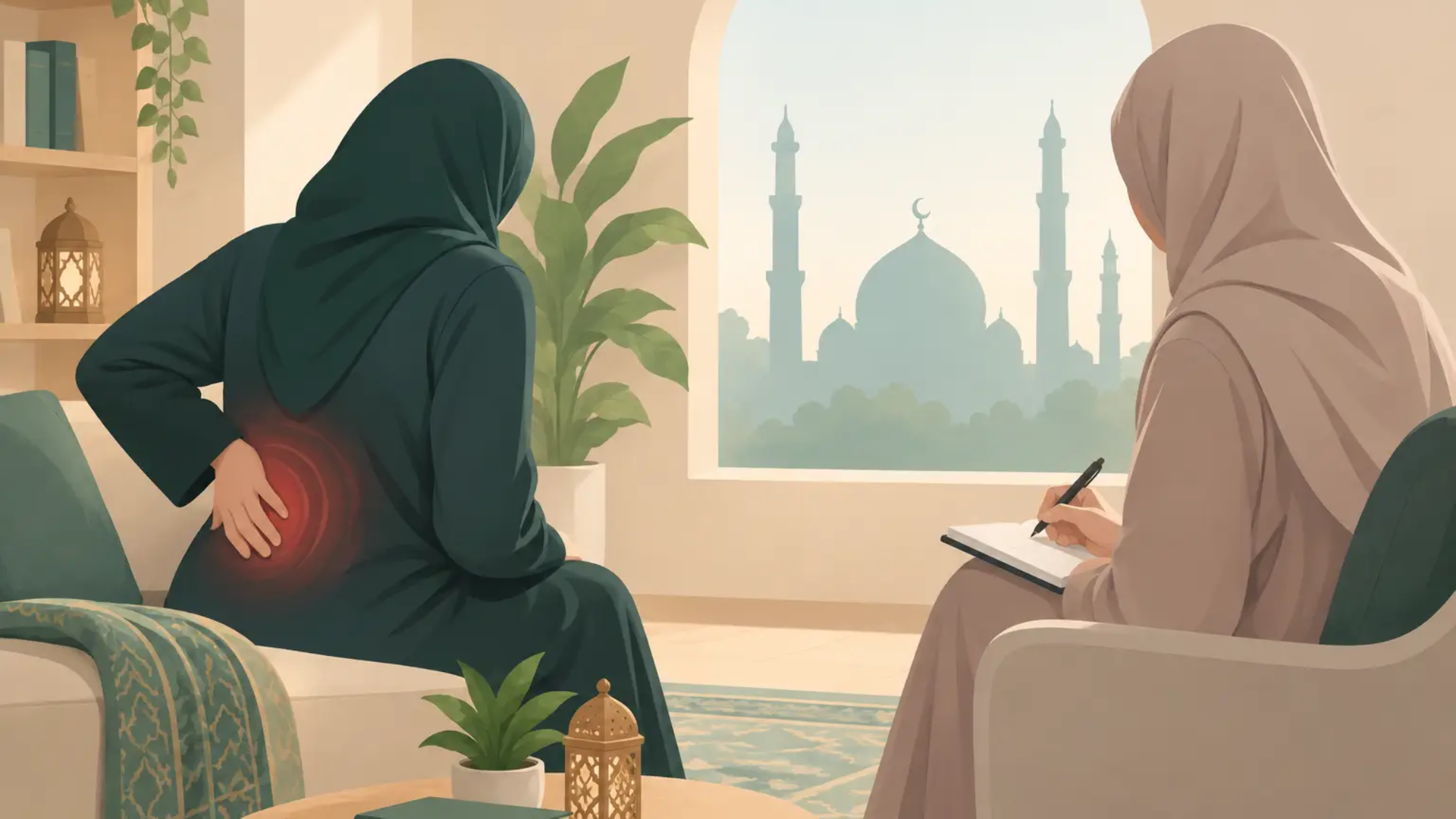
Some forms of pain are visible. Others live beneath the surface: the migraine that makes light feel unbearable, the pelvic pain that interrupts prayer, the aching body that looks “fine” to everyone else, or the exhaustion of waking each morning already braced for the day. Islamic counseling for chronic pain offers a place to hold the full reality of that experience without asking you to choose between sound clinical care and your relationship with Allah.
Chronic pain can change far more than a schedule. It can affect sleep, concentration, mobility, marriage, parenting, work, worship, and the confidence to make plans. For many Muslim women, it also carries a quieter burden: the fear that others will interpret their suffering as weak faith, insufficient gratitude, or a lack of sabr. That interpretation is not only painful. It can keep a person isolated from the support she deserves.
Pain is not a moral failure. Seeking treatment is not a sign of spiritual deficiency. A faith-integrated therapeutic approach can make room for both medical reality and spiritual meaning, helping you respond to pain with greater clarity, flexibility, and compassion.
What Islamic Counseling for Chronic Pain Makes Room For
Chronic pain is pain that persists beyond the expected period of healing, often lasting months or longer. It may be connected to conditions such as migraines, endometriosis, autoimmune illness, fibromyalgia, nerve pain, gastrointestinal disorders, injury, or long-term effects of trauma. Sometimes a clear diagnosis exists. Sometimes a woman has spent years pursuing answers while being told that her tests are normal or that she is simply stressed.
Stress can influence the nervous system and intensify pain, but that does not mean the pain is imagined. The brain, body, immune system, sleep cycle, emotions, and lived history are in constant conversation. A clinically informed therapist understands this complexity without reducing physical symptoms to psychology.
Islamic counseling makes room for another dimension as well: the heart. It recognizes that pain may raise questions about qadr, worship, identity, dependence, fear, and hope. A woman may grieve the version of herself who could move easily, fast regularly, keep every commitment, or pray in the way she once did. She may feel guilty for resting. She may feel angry with her body, ashamed of needing help, or frightened that pain will never loosen its hold.
These reactions deserve compassionate attention, not religious correction. Sabr is not emotional suppression. It is not pretending that hardship does not hurt. It can include taking prescribed medication, attending therapy, setting limits, asking for support, and returning to Allah honestly from within a difficult reality.
Pain, the Nervous System, and Emotional Safety
Persistent pain can train the nervous system toward protection. When the body has repeatedly experienced danger, inflammation, injury, unpredictability, or overwhelming stress, it may become more vigilant. This does not mean a person is causing her pain through worry. It means the body may be working very hard to keep her safe, even when that protection becomes exhausting.
Therapy can help reduce the secondary suffering that often grows around pain: catastrophizing, fear of movement, isolation, sleep disruption, perfectionism, grief, and the pressure to perform wellness for others. The goal is not to tell yourself that pain is harmless when it is not. The goal is to learn how to respond to discomfort, fear, and limitation in ways that do not further narrow your life.
Approaches such as Acceptance and Commitment Therapy, or ACT, can be especially helpful here. ACT does not require you to wait for symptoms to disappear before living according to your values. Instead, it helps you identify what matters while building flexibility around the thoughts and emotions that pain can bring. For a Muslim woman, values may include presence with family, service, learning, modest self-care, meaningful work, or worship that is sustainable rather than driven by guilt.
Cognitive Behavioral Therapy can help identify patterns that amplify distress, such as all-or-nothing thinking: “If I cannot do it perfectly, there is no point.” Dialectical Behavior Therapy skills may support emotional regulation during pain flares. Trauma-informed treatment, including EMDR when clinically appropriate, can be important for women whose nervous systems carry the effects of trauma alongside physical symptoms.
The right method depends on your symptoms, medical history, trauma history, and goals. Therapy is not a replacement for medical evaluation or specialty pain care. It can, however, become a vital part of a broader treatment plan.
Faith Integration Is More Than Adding Religious Language
A genuinely Islamic approach is not simply telling someone to make more du’a when she is suffering. Du’a can be deeply sustaining, but therapy should not turn worship into another item on an impossible to-do list.
Faith integration begins with religious fluency and clinical discernment. It means understanding that Islamic teachings honor the sick, recognize hardship, and do not demand performance beyond capacity. It means discussing prayer accommodations without shame, exploring the difference between healthy spiritual practice and compulsive reassurance-seeking, and approaching questions of qadr with care rather than slogans.
For someone living with OCD or waswasa, for example, pain may become entangled with fears about purity, prayer validity, or divine punishment. In those moments, reassurance alone may feed the cycle. Evidence-based Exposure and Response Prevention, paired with sound Islamic understanding, can help a woman practice her faith without being ruled by intrusive doubt.
For another woman, spiritual practices may be a genuine source of grounding. Gentle dhikr during a flare, reciting Qur’an while resting, making du’a with honest words, or reflecting on Allah’s mercy may support emotional regulation and meaning. These practices should be offered with sensitivity, never used to deny grief or pressure a person to feel peaceful before she is ready.
Building a Life That Is Not Organized Around Pain
Chronic pain often pushes life into two extremes. On better days, a person may overextend herself in an effort to catch up. On worse days, she may withdraw completely, feeling defeated before the day begins. This boom-and-bust cycle is understandable, especially when you have spent years trying to prove that you are still capable.
Therapy can help create a more sustainable rhythm. That may involve pacing activities, learning to notice early signs of overload, communicating needs clearly, grieving losses without surrendering hope, and setting boundaries around demands that exceed your current capacity. Progress may look less dramatic than a cure. It may look like taking a break before your body forces one, attending a family gathering with an exit plan, or praying seated without turning that accommodation into a personal indictment.
A values-based approach also asks a different question from “How do I get back to who I was?” It asks, “Who am I becoming in this season, and what does faithfulness look like here?” That question protects dignity. It allows room for ambition, tenderness, and a future that is not defined solely by symptoms.
What to Expect From Therapy
In a first session, a therapist may ask about your pain history, medical care, sleep, mood, daily functioning, relationships, stressors, trauma history, and spiritual concerns. This assessment helps distinguish the many factors that may be shaping your experience. You do not need to have the perfect explanation for your pain before beginning.
Your treatment plan should be collaborative. It may include skills for nervous system regulation, work around fear and avoidance, trauma processing, support for depression or anxiety, and practical strategies for managing flare days. If faith is central to your life, it can be integrated thoughtfully and at a pace that feels safe to you.
At Manara Counseling, this kind of work is grounded in both evidence-based psychotherapy and Islamic scholarship. For Muslim women who have felt unseen in conventional spaces or dismissed in religious ones, that combination can offer a different kind of therapeutic safety: care that takes the body seriously, honors the soul, and treats neither as an afterthought.
There are moments when pain requires urgent medical attention, particularly when it is new and severe or accompanied by concerning symptoms such as weakness, confusion, fainting, chest pain, or loss of bladder or bowel control. Therapy can support coping and healing, but immediate medical concerns should be evaluated by an appropriate medical professional.
You do not have to earn compassion by being cheerful about what hurts. You are allowed to seek relief, accept accommodations, and bring your most difficult questions to Allah. Even within a body that feels uncertain, a rooted soul can learn to meet each day with greater steadiness, honesty, and mercy.

Leave Your Comment
You must be logged in to post a comment