
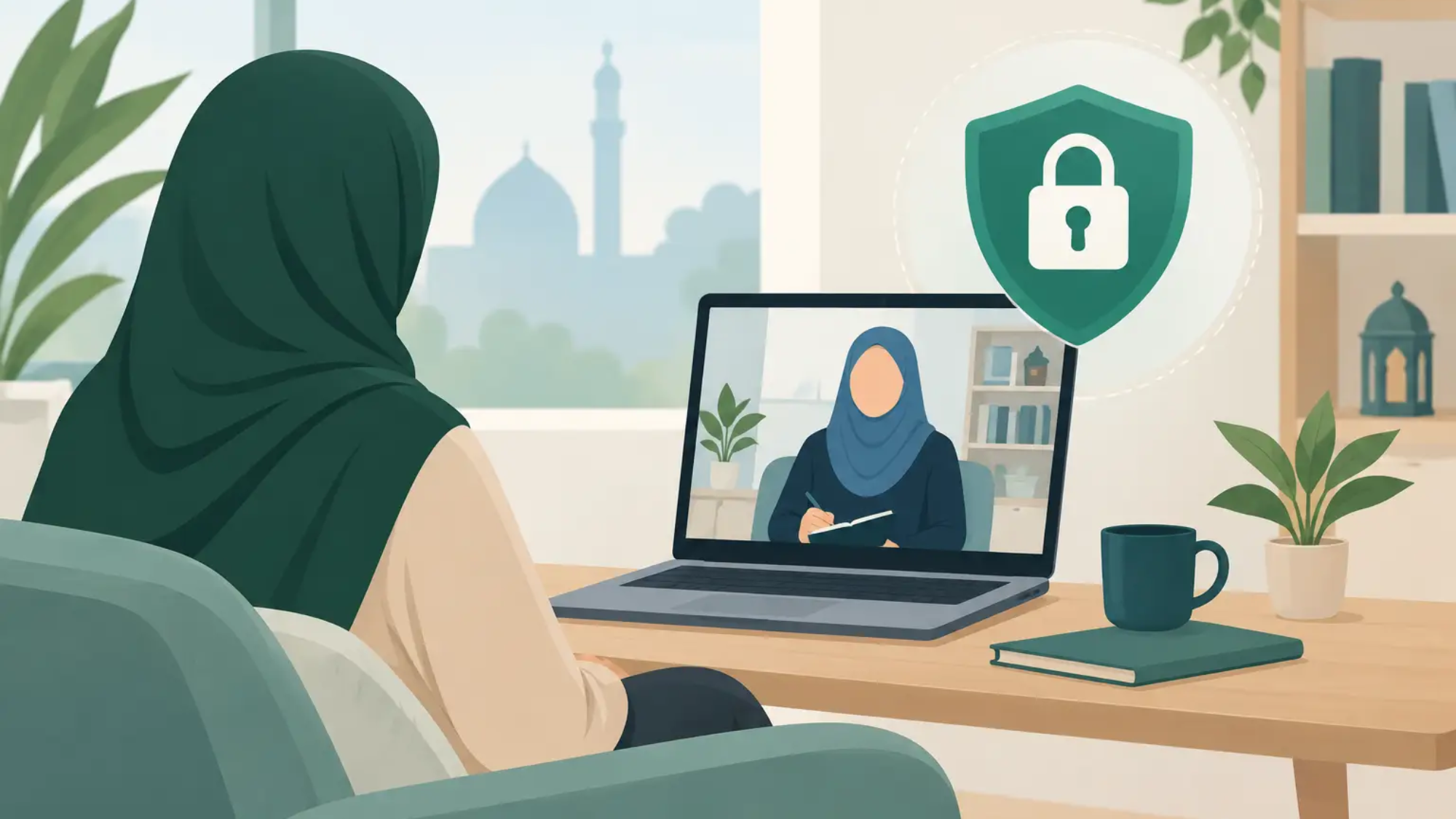
You may be ready to speak about the memories, fears, or intrusive thoughts you have held close for years, yet one question still makes you pause: is teletherapy confidential? For most clients, the answer is yes. Online therapy is built on the same ethical and legal duty of confidentiality as in-person therapy. But meaningful privacy also depends on the technology used, the clinician’s practices, and the space from which you join your session.
For Muslim women especially, privacy can carry layers of meaning beyond convenience. You may be protecting details of a marriage, family conflict, religious struggle, trauma history, or a mental health concern you fear others will misunderstand. Seeking care is not a betrayal of your dignity or your family. It can be a careful, faith-centered act of tending to the amanah Allah has placed within you.
Is Teletherapy Confidential Under the Law?
Licensed therapists are generally required to protect your private health information, whether therapy happens in an office or through a video appointment. In the United States, many mental health providers are governed by HIPAA, a federal law that sets standards for safeguarding protected health information. State licensing laws and professional ethics rules also shape how clinicians store records, communicate with clients, and respond to privacy concerns.
Confidentiality means your therapist does not casually share what you say in session with your spouse, parents, friends, employer, imam, or anyone else. A therapist cannot disclose your information simply because someone asks. Even when a loved one pays for therapy, that does not automatically give them access to your sessions or records.
There are limits to confidentiality, and an ethical therapist should explain them clearly before treatment begins. Exact requirements vary by state, but disclosure may be required when there is a serious and imminent risk of harm to you or another person, suspected abuse or neglect of a child, elder, or vulnerable adult, or a valid court order. These exceptions exist to protect life and safety, not to punish someone for suffering.
If you are an adult, having anxiety, depression, OCD, waswasa, traumatic memories, or distressing thoughts does not by itself mean your therapist will report you. In fact, therapy should be one of the places where you can name painful experiences honestly and receive skilled care rather than shame.
What Makes Teletherapy Confidential in Practice?
The clinical obligation is the same online, but virtual care introduces practical details that deserve attention. A trustworthy telehealth practice uses a platform designed for healthcare privacy, rather than conducting sessions through casual social media video calls or public livestreaming tools. The practice should also have policies for secure documentation, protected client portals, and communication that respects the sensitivity of mental health information.
Your therapist has responsibilities, but you have a role in creating privacy on your side of the screen as well. A session held from a parked car with the doors locked may be more private than a bedroom where family members regularly enter. Headphones can help prevent others from overhearing. A white-noise machine, fan, or quiet background audio outside the door may offer another layer of discretion when private space is limited.
It is also wise to consider notifications. If your phone or laptop displays appointment reminders, email previews, or portal messages on a shared screen, someone else may see them. Use a personal device when possible, set a password, turn off lock-screen previews, and log out after your session if you share a computer.
These steps are not about asking you to carry the whole burden of privacy. They are about giving you choices. Healing requires enough safety for your nervous system to settle, especially when therapy includes trauma work, EMDR preparation, exposure and response prevention for OCD, or deeper exploration of painful relational patterns.
Your Physical Setting Matters
Teletherapy is often most effective when you can speak without monitoring every word. If you live with family, roommates, or children, it may help to decide before your appointment where you will sit and what you will say if interrupted. You do not owe anyone a detailed explanation. “I have a private appointment” is enough.
If there is no reliably private place at home, tell your therapist. This is a clinical concern, not a personal failure. Together, you may be able to adjust appointment times, use a different location, pause sensitive topics when needed, or create a plan that protects your emotional safety.
What About Insurance, Records, and Family Access?
Therapy records are confidential, but insurance adds a separate layer of visibility. If you use insurance, an explanation of benefits may be sent to the policyholder. It may list the provider’s name, date of service, and a general type of service. It usually does not include a detailed account of what you discussed in therapy, but it can reveal that you received mental health care.
If you are on a spouse’s or parent’s plan and this concerns you, ask the insurance company about confidential communications or alternate mailing options. You can also ask a prospective therapist about private-pay options and documentation practices. There may be financial trade-offs, so the best path depends on your circumstances, coverage, and need for discretion.
Your clinical record is not a diary that family members can request and read at will. Adults generally control access to their own records. For minors, parents or guardians often have legal rights to information, though the details differ by state and circumstance. If you are seeking therapy as a young adult while living at home, it is appropriate to ask directly what communications, billing information, and records may be visible to others.
Questions You Deserve to Ask Before Your First Session
A good therapeutic relationship makes room for direct questions. Before beginning teletherapy, you can ask which video platform is used, how records are stored, how the therapist communicates between sessions, and whether text messages or emails are appropriate for scheduling only. You can also ask how emergencies are handled when care is virtual.
Ask the therapist to explain confidentiality and its limits in plain language. If you are worried about a specific situation, such as an abusive relationship, immigration concerns, family pressure, or a shared insurance plan, name only as much as feels safe and ask how privacy would work. Clear answers are part of informed consent.
For faith-integrated care, you may also want to know how Islamic values are approached. Religious fluency should never become another avenue for disclosure without your consent. A therapist may help you explore guilt, scrupulosity, family obligations, or your relationship with Allah, while still honoring clinical boundaries and the privacy of what you share.
Confidentiality Is Part of Emotional Safety
Privacy is not merely a legal checkbox. It is part of what allows therapy to become a truthful space. When you have spent years appearing composed while privately carrying grief, panic, resentment, or fear, being heard without exposure can be profoundly reparative.
There are times when teletherapy may not be the right fit. If a controlling person monitors your device, listens outside the door, tracks your location, or retaliates when you seek support, your safety needs careful planning. Tell a therapist what is happening if you can do so safely. Virtual treatment can still be possible, but the plan may need to look different.
You are allowed to seek help with wisdom and discretion. Choosing a private corner, asking careful questions, and speaking honestly with a qualified clinician are not signs of weakness. They are small, steady acts of honoring your mind, your safety, and the sacred life Allah has entrusted to you.

Leave Your Comment
You must be logged in to post a comment