
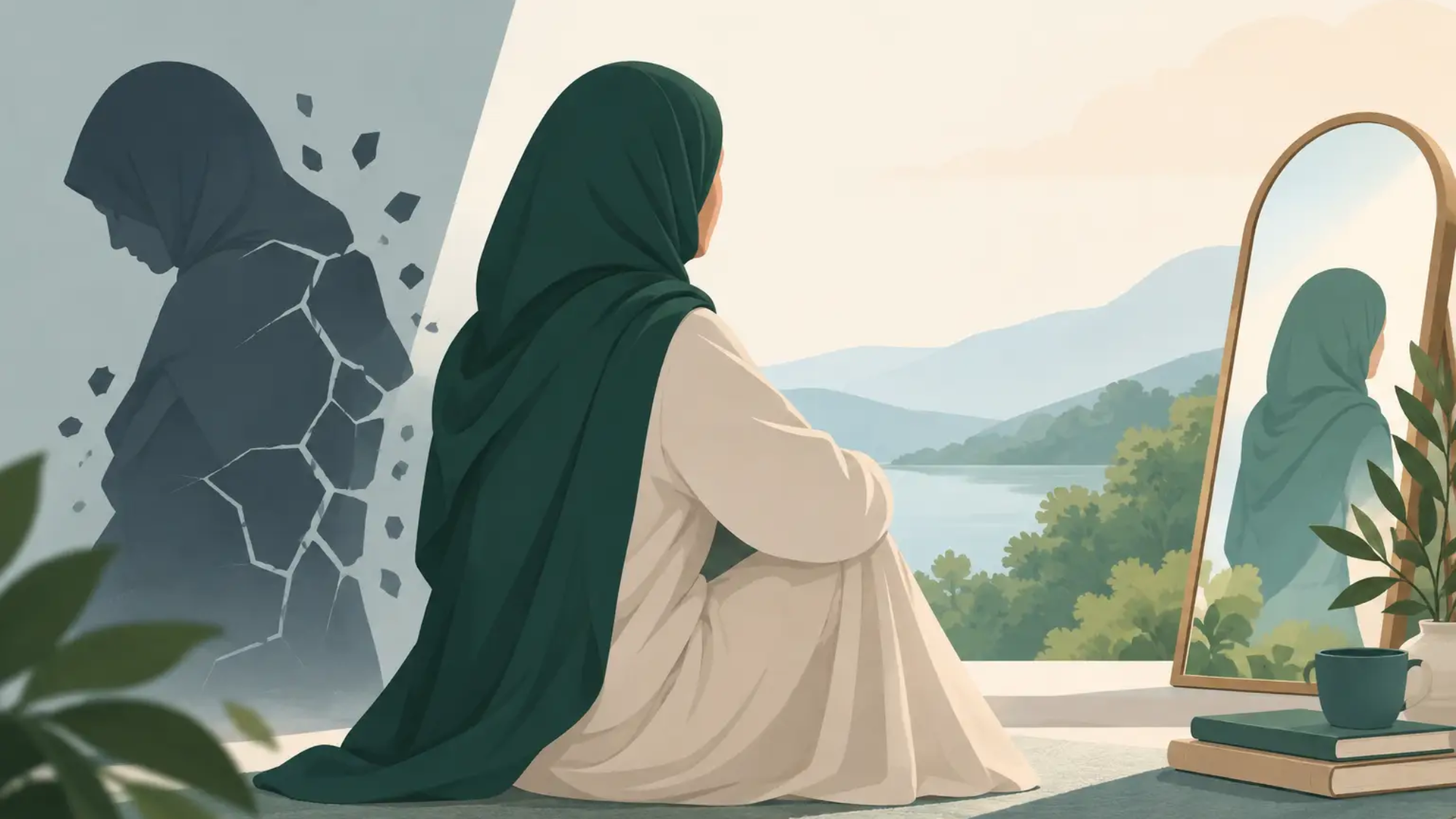
The moment you learn that someone you trusted has lied, concealed, or violated the safety of your relationship, your whole system may begin searching for an answer: How did I not know? Betrayal trauma recovery begins by honoring that this is not simply heartbreak or a failure to be patient. It is an injury to trust, attachment, reality, and often to the sense of safety you carry in your own body.
For many Muslim women, the pain is made heavier by the pressure to keep the family intact, avoid exposing private matters, forgive quickly, or prove spiritual strength through silence. Faith can be a profound source of steadiness in this season. It should never be used to rush your healing, excuse harm, or ask you to abandon the truth Allah has allowed you to see.
What Makes Betrayal Trauma Different?
Betrayal trauma can occur when a person you depend on for love, safety, financial stability, family connection, or emotional security violates your trust. It may involve infidelity, hidden pornography use, financial deception, emotional affairs, repeated lying, secret addictions, or another ongoing pattern of concealment and manipulation.
The trauma often does not come from one fact alone. It comes from the collapse of what you believed was real. You may look back at ordinary conversations, family gatherings, messages, and moments of affection, wondering which parts were genuine. That confusion is not proof that you are irrational. Your mind is trying to reconcile two conflicting realities: the relationship you thought you had and the information you now carry.
Because the person who caused the injury may also be the person you want comfort from, your nervous system can become caught in a painful loop. You may feel desperate for reassurance one hour and unable to tolerate being near them the next. You may repeatedly ask questions, check details, replay conversations, or feel numb when you expected tears. These are common trauma responses, not character flaws.
The Body Keeps Looking for Danger
Betrayal can activate the brain’s threat-detection system. Sleep may become lighter or fragmented. Your appetite, concentration, prayer routine, work performance, and ability to be present with your children may change. Some women experience panic, intrusive images, anger that feels unfamiliar, physical tension, or a constant urge to investigate.
Others minimize what happened because acknowledging it fully feels too destabilizing. This can be especially true when there are children, immigration concerns, financial dependence, community pressure, or a long history of being told to make excuses for someone else’s behavior. Minimizing may have helped you survive. Recovery creates space to face reality without forcing yourself into decisions before you are ready.
Betrayal Trauma Recovery Starts With Safety and Truth
Healing is not the same as immediately deciding whether to stay or leave. The first task is often stabilization: helping your body and mind regain enough safety that you can think clearly, feel what you feel, and make choices from conviction rather than panic.
Safety can include practical matters, such as determining whether there is emotional, financial, sexual, or physical risk. It can also mean reducing exposure to blaming conversations, pausing conflict that becomes volatile, protecting sleep, and identifying one or two trustworthy sources of support. If there is any threat of physical harm, coercion, stalking, or intimidation, safety planning needs to come before relationship repair.
Truth matters here because healing cannot be built on denial. A spouse’s remorse may be meaningful, but remorse is not the same as sustained accountability. Repair usually requires honest disclosure, a willingness to answer reasonable questions without turning defensive, clear boundaries around the harmful behavior, and consistent actions over time. You do not have to call ongoing deception “a test” and remain unprotected.
Islam honors mercy, justice, truthfulness, and the dignity of the harmed person. Sabr is not passive endurance of repeated injury. Tawakkul is not abandoning wise action. You can seek Allah’s guidance while also gathering information, setting limits, and receiving skilled care.
Why Forgiveness Cannot Be Forced
Many women fear that anger means they are spiritually failing. Yet anger can be the part of you that recognizes a boundary was crossed. It may need guidance so that it does not consume your life, but it does not need shame.
Forgiveness, if and when it comes, is a personal spiritual process. It is not a requirement to resume trust, reconcile, stop asking questions, or remain in a harmful situation. Trust is relational and evidence-based. It is rebuilt through reliable behavior over time, not through pressure, promises, or religious language used to end difficult conversations.
There is also a difference between forgiveness and pretending the harm did not matter. Allah is Al-‘Adl, the Perfectly Just. Seeking clarity and accountability can be part of living with integrity, not a departure from compassion.
How Trauma-Informed Therapy Helps
A therapist who understands betrayal trauma does not begin by asking you to “move on.” She helps you understand what your nervous system is doing and why. Therapy can offer a private, structured place to grieve the relationship you believed you had, name what occurred accurately, and regain confidence in your own perceptions.
The right approach depends on your symptoms, history, and present circumstances. Cognitive behavioral therapy can help identify the thoughts that intensify shame, such as “I should have known” or “This happened because I was not enough.” Acceptance and commitment therapy can help you make room for painful feelings while choosing actions aligned with your values. DBT skills can support emotional regulation when conflict, rage, or panic feels overwhelming.
When the experience continues to live in the body as intrusive memories, hypervigilance, or fear, trauma-focused approaches such as EMDR, Written Exposure Therapy, or Cognitive Processing Therapy may be appropriate. If betrayal has awakened earlier attachment wounds or parts of you that feel young, frightened, or fiercely protective, Internal Family Systems-informed work can help you respond to those parts with compassion rather than self-judgment.
Faith-integrated therapy adds another layer of care. It makes room for the questions that may not fit neatly elsewhere: What does this mean for my deen? How do I pray when I feel numb? How do I hold grief and trust Allah at the same time? A clinically trained Muslim therapist can honor these questions without reducing complex trauma to a reminder to make more du’a.
Rebuilding Trust in Yourself
One of the deepest losses after betrayal is self-trust. You may question your discernment, memories, instincts, or worth. Recovery includes practicing a different response to yourself: believing your internal signals while checking facts, respecting your limits, and letting your values guide your next step.
This does not mean becoming suspicious of everyone. It means becoming more grounded in your ability to notice what is present. Over time, you may find that your questions become less frantic, your boundaries become clearer, and your life grows larger than the injury. You are not required to have every answer before you begin caring for yourself.
Small acts can support this process: eating regular meals, returning to a calming Qur’an recitation, writing down facts when your mind starts spiraling, speaking to one safe person, or taking a pause before responding to a difficult message. These are not substitutes for therapy when trauma symptoms are severe. They are ways of reminding your body that you are here, you have choices, and you are worthy of care.
You Are Allowed to Heal at Your Own Pace
There is no faithful timeline for betrayal trauma recovery. Some women need to make immediate decisions because safety or repeated harm demands it. Others need time to observe whether genuine repair is possible. Both situations require tenderness, wisdom, and support.
What happened may have changed your relationship, but it does not erase your relationship with Allah, your intelligence, or your future. Healing can be a faithful return to the part of you that knows you were created with dignity. Take the next honest step, and let that step be enough for today.

Leave Your Comment
You must be logged in to post a comment