
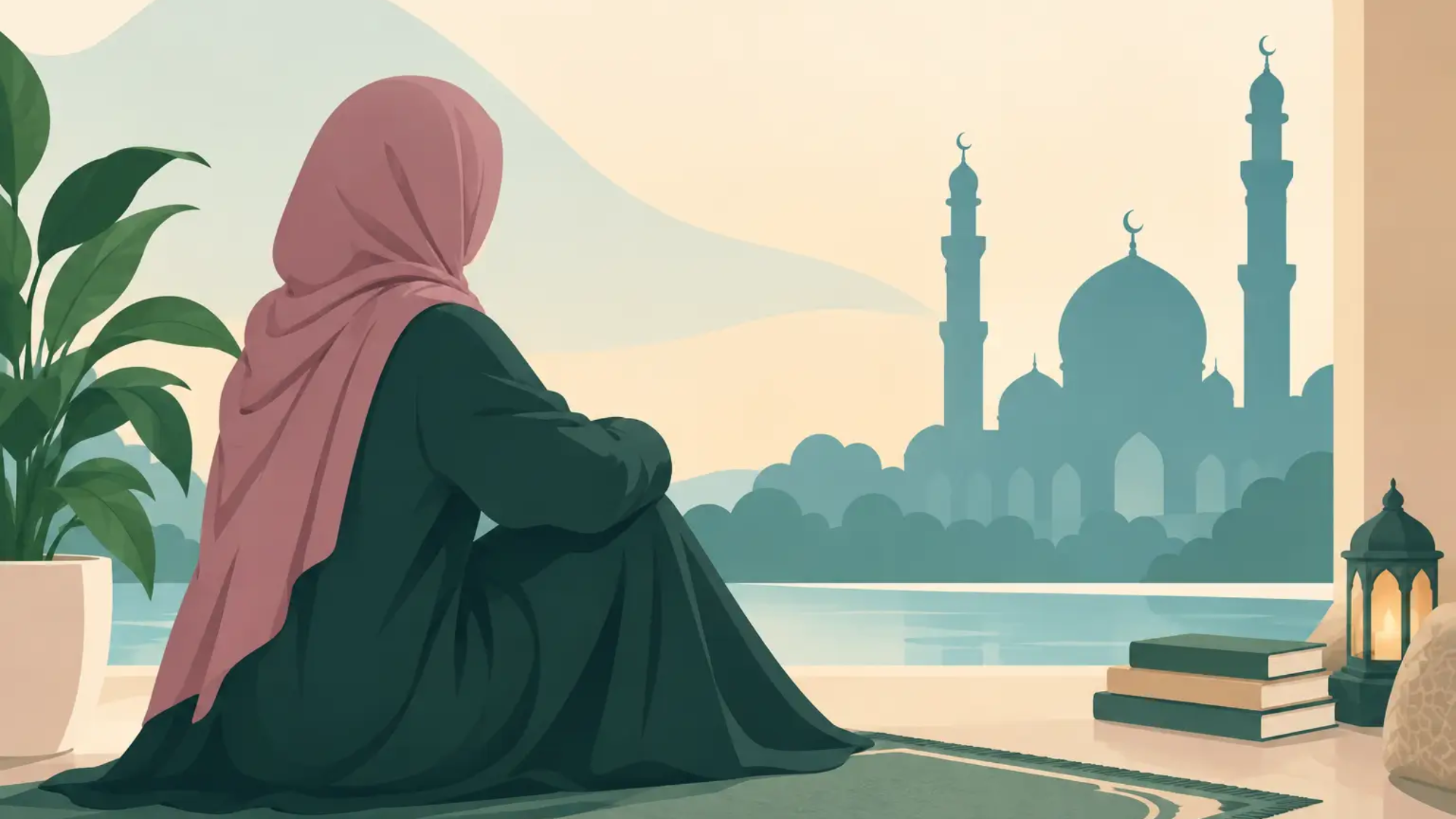
A woman may look composed while carrying a nervous system that has not felt safe for years. She may pray, work, care for others, and still lie awake rehearsing every mistake, fearing Allah is displeased with her, or feeling panicked by memories she cannot simply will away. Muslim mental health success stories matter because they give language to a truth many women need to hear: faithful endurance and clinical healing can belong together.
Success is not always a dramatic before-and-after. Often, it is quieter. It is a woman recognizing an intrusive thought as OCD rather than a reflection of her character. It is someone with trauma sleeping through the night more often, setting a boundary without collapsing into guilt, or returning to salah with less fear and more presence. These changes are not small. They are signs that the heart, mind, and body are learning a different way to live.
What Muslim Mental Health Success Stories Actually Show
The most meaningful stories do not suggest that therapy makes a person immune to hardship. Islam does not promise a life without tests, and psychotherapy does not promise that every painful feeling will disappear. Rather, healing can make suffering more understandable, more workable, and less isolating.
For Muslim women, this distinction is especially important. Some have been told to make more du’a when they were experiencing panic attacks. Others have been told to be patient when they needed protection from abuse, grief support after a loss, or treatment for depression. Prayer, Qur’an, dhikr, community, and reliance on Allah are profound sources of strength. They are not substitutes for trauma treatment, exposure therapy for OCD, or practical support when the nervous system is overwhelmed.
A faith-integrated approach does not set Islamic practice against clinical care. It asks better questions: What is this symptom? What maintains it? What treatment is supported by evidence? How can a woman pursue healing while staying connected to her values, worship, and accountability to Allah?
Success Can Begin With Naming What Is Happening
Consider the woman who repeatedly makes wudu because she fears it was invalid, restarts prayers because they do not feel perfect, or seeks constant reassurance that she has not committed kufr through an unwanted thought. She may call it weak iman. In reality, she may be experiencing religious OCD, sometimes expressed through waswasa.
Her progress begins when she understands that intrusive thoughts are not intentions and not moral verdicts. With Exposure and Response Prevention, or ERP, she gradually practices resisting compulsions and reassurance-seeking. This work can feel frightening at first because OCD insists that certainty is necessary for safety and piety. Yet over time, she may learn to tolerate uncertainty, complete her worship without endless repetition, and relate to Allah with greater trust rather than constant terror.
That is not carelessness in faith. It is treatment for a disorder that has been attaching itself to what she loves most.
For another woman, anxiety may have become so familiar that she no longer calls it anxiety. She calls it being responsible. She anticipates everyone else’s needs, overexplains simple decisions, checks messages compulsively, and cannot rest without guilt. Cognitive Behavioral Therapy, Acceptance and Commitment Therapy, and skills drawn from DBT can help her notice the cycle between feared outcomes, anxious thoughts, and protective behaviors.
Success may look like pausing before responding, allowing a text to remain unanswered for an hour, or choosing rest without needing to earn it. Her life may still be full, but it is no longer governed entirely by alarm.
Trauma Healing Is Not Forgetting
Trauma often teaches the body that the danger has not ended. A woman may know intellectually that she is safe, yet startle easily, go numb during conflict, avoid certain places, or feel flooded by shame when a memory surfaces. She may have spent years minimizing what happened because others did not name it as harmful.
Trauma-focused care honors both the reality of what occurred and the capacity to move forward. Depending on her history and needs, treatment may include EMDR, Cognitive Processing Therapy, Written Exposure Therapy, Internal Family Systems-informed work, or other evidence-based approaches. The goal is not to force disclosure or make someone relive pain without support. It is to help the brain and body process what remains stuck.
A meaningful turning point may come when she can tell the truth: what happened to me was not my fault. Another may come when she notices that a raised voice no longer sends her into hours of panic. For some women, success is being able to receive kindness without suspicion. For others, it is grieving what was lost while refusing to let the past determine every future relationship.
Islamic spiritual grounding can support this work without pressuring a survivor to rush toward forgiveness or silence. Allah’s justice is not a demand that she deny her wound. Her dignity is not restored by pretending she was never hurt. Healing can include discernment, boundaries, lament, repentance where it is truly hers to make, and a faithful return to the parts of her life that trauma tried to steal.
Depression Can Lift Without Making Life Perfect
Depression is often misunderstood in Muslim communities as laziness, ingratitude, or a failure to appreciate blessings. A woman struggling with depression may be grateful for Allah’s gifts and still find it difficult to get out of bed. She may love her family and still feel emotionally distant. She may want to pray and still lack the energy to begin.
Therapy can help distinguish spiritual dryness from a treatable mood condition, though the two can sometimes coexist. In treatment, a woman may learn to work with self-critical thinking, rebuild daily structure, process grief, and take small actions before motivation fully returns. When appropriate, therapy may also include coordination with medical providers around sleep, chronic pain, medication, or other health concerns.
Her success story may not be that she feels happy every day. It may be that she stops calling herself a burden. It may be that she showers, eats consistently, reconnects with a trusted friend, or opens the Qur’an without using it as proof that she is failing. These are acts of life returning.
Why the Right Therapeutic Fit Changes the Story
A therapist does not need to share every aspect of a client’s identity to provide good care. But for many Muslim women, religious fluency and cultural humility reduce the exhausting labor of explanation. She should not have to defend why modesty matters to her, explain the difference between sincere repentance and compulsive reassurance, or fear that her devotion will be dismissed as pathology.
At the same time, a shared faith identity alone is not enough. A woman deserves clinical rigor. Complex trauma, OCD, panic, chronic pain, and depression require more than generic encouragement. The therapeutic relationship should make room for tenderness and accountability, spiritual meaning and behavioral change, deep validation and practical skill-building.
At Manara Counseling, this is understood as care for the whole person: a mind shaped by learning and experience, a body carrying stress responses, and a soul seeking nearness to Allah. Treatment is individualized because no two stories have the same causes, symptoms, supports, or pace. Intensive work may help one woman; weekly therapy may be wiser for another. There is no virtue in rushing a process that requires safety and trust.
Let Your Story Be More Than Survival
Many women arrive in therapy after years of functioning. They have survived, served, achieved, and endured. But survival is not the only measure of strength. It is permissible to want a life with more steadiness, more choice, more honest connection, and more room to worship without fear consuming the space where peace could grow.
Your success may be visible to no one else at first. It may be the moment you ask for help without apologizing, identify a pattern that once felt like your personality, or believe that Allah’s mercy is not withdrawn because you are struggling. That first truthful step is not the end of your story. It may be the beginning of a more rooted one.
