
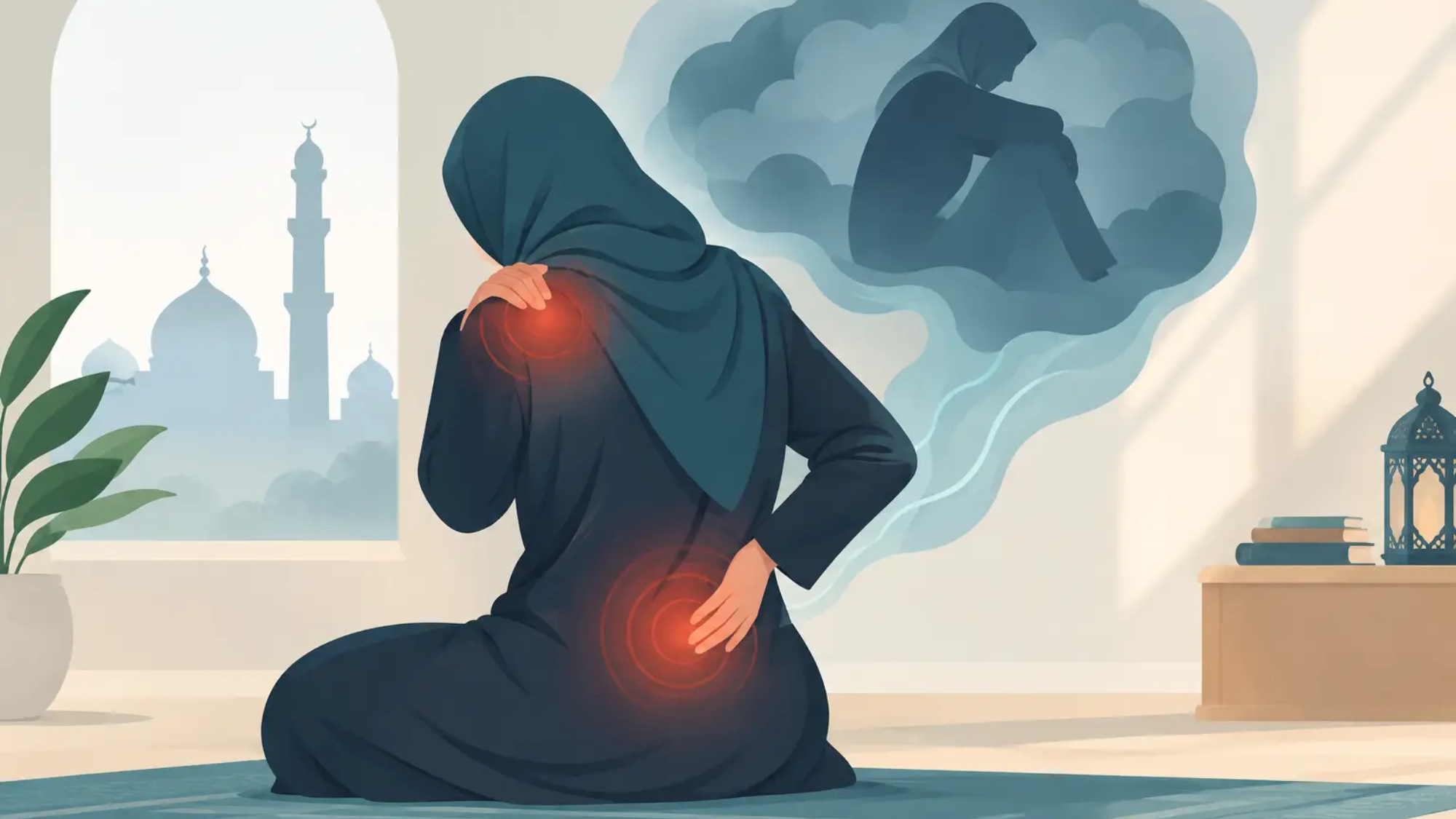
A back injury may have healed, lab work may be unremarkable, and yet the pain remains: a clenched jaw, burning shoulders, migraines, pelvic pain, stomach distress, or a body that seems to ache without permission. If you have wondered, can trauma cause chronic pain, the answer is nuanced but clear: trauma can meaningfully affect how the brain, nervous system, and body experience and sustain pain.
This does not mean the pain is imagined. It does not mean you are weak, overly emotional, or lacking in faith. Pain is real whether its earliest driver is tissue damage, inflammation, nerve injury, nervous-system sensitization, or several factors at once. For many Muslim women, being met with this distinction can be a relief. You do not need to choose between taking your symptoms seriously and recognizing that your history may be living in your body.
Can trauma cause chronic pain in the body?
Trauma is not only an event that happened in the past. It can be an experience that the nervous system continues to register as unfinished danger. This may follow abuse, assault, medical trauma, a frightening accident, childhood neglect, loss, chronic criticism, discrimination, or years of living under pressure without enough safety or support.
When danger is present, the body is designed to protect you. Your heart rate rises, muscles brace, breathing changes, and attention narrows. These responses are merciful in a true emergency. But when the alarm system stays activated long after the threat has passed, the body may become highly watchful for discomfort. Muscles can remain tense, sleep may become lighter, digestion may be disrupted, and ordinary sensations can be interpreted by the brain as signals of danger.
Over time, this can contribute to chronic pain. The clinical term often used is central sensitization: the nervous system becomes more sensitive to pain signals. It is not a character flaw or a sign that someone is “making it up.” It is a learned protective pattern, and learned patterns can change.
Trauma does not cause every case of chronic pain. Arthritis, endometriosis, autoimmune conditions, nerve damage, migraines, and injuries deserve careful medical attention in their own right. Yet even when there is a clear medical diagnosis, trauma-related stress can intensify symptoms, affect flare-ups, and make pain harder to manage. Both realities can be true at the same time.
Why pain can persist after danger has passed
The brain does not experience pain as a simple report from one body part. It interprets information from nerves alongside context: sleep, stress, past experiences, mood, inflammation, attention, and whether the body feels safe. If a person has spent years anticipating criticism, harm, abandonment, or humiliation, her system may become skilled at anticipating threat everywhere, including within bodily sensations.
This is one reason pain can fluctuate. A woman may notice that her neck pain worsens after family conflict, that pelvic symptoms intensify around a difficult anniversary, or that migraines arrive after she has pushed through weeks of exhaustion. These patterns are not proof that pain is “all in the mind.” They are evidence that mind and body were never separate systems to begin with.
Avoidance can also unintentionally strengthen the cycle. When movement, rest, food, social settings, or medical appointments become associated with danger, the nervous system may begin to respond before anything harmful has occurred. This does not mean you should force yourself through severe symptoms. It means a thoughtful treatment plan can help your body learn, gradually and safely, that not every sensation requires full alarm.
Trauma may look quieter than people expect
Not every trauma memory arrives as a vivid flashback. Sometimes it appears as relentless self-criticism, overfunctioning, emotional numbness, trouble resting, panic at small physical changes, or a feeling that you must stay productive no matter how much you hurt. Many high-capacity women have survived by becoming exceptionally responsible. Their bodies may carry the cost of what their words have had little room to say.
In Islamic language, sabr is not passive denial. It is steadfastness in turning toward Allah while taking the means available to us. Seeking medical care, setting limits, grieving honestly, and receiving trauma treatment can all be forms of that faithful turning. You are not required to spiritualize pain away in order to be a devoted Muslim woman.
What healing can include
Because chronic pain is complex, effective care is often collaborative. A physician or specialist can help assess physical causes and rule out conditions that need direct medical treatment. Mental health treatment can address the nervous system, trauma memories, fear of symptoms, sleep disruption, and the emotional burden of living in pain.
In therapy, the goal is not to convince you that your body is fine. The goal is to help your system experience more safety, flexibility, and choice. Depending on your needs, treatment may include trauma-focused approaches such as EMDR, Cognitive Processing Therapy, or Written Exposure Therapy. Acceptance and Commitment Therapy can help you make room for difficult sensations while moving toward what matters. CBT and DBT skills can support pacing, emotion regulation, and responses to pain-related thoughts. Internal Family Systems may help with the protective parts of you that have had to stay vigilant for a very long time.
For someone whose faith is central, therapy can also make room for the spiritual questions pain raises. You may be grieving the life you expected, struggling to pray with focus, feeling guilty for needing rest, or fearing that your hardship means Allah is displeased with you. These concerns deserve tenderness and sound religious understanding, not quick reassurance.
A faith-integrated approach does not treat dhikr, du’a, or salah as replacements for clinical care. Rather, it honors them as sources of grounding, meaning, and relationship with Allah alongside evidence-based treatment. A regulated breath before prayer, compassionate pacing during a flare-up, and a more merciful inner voice can become part of a life that is both clinically supported and spiritually rooted.
Practical ways to respond without dismissing yourself
Start with curiosity rather than accusation. Instead of asking, “Why am I still like this?” you might ask, “What does my body seem to need right now?” Notice patterns around sleep, activity, stress, menstrual cycles, relationships, and pain intensity, not to become hypervigilant, but to gain useful information.
Pacing is often more helpful than swinging between pushing through and collapsing. This may mean breaking tasks into smaller portions, building in recovery time before a flare-up, and reintroducing feared movement with appropriate medical guidance. Gentle nervous-system practices, such as slower breathing, orienting to the room, progressive muscle relaxation, or grounding through the senses, can help signal present-day safety.
It is also wise to speak with a medical professional promptly about new, severe, or changing pain. Seek urgent care for symptoms such as sudden weakness, loss of bladder or bowel control, chest pain, trouble breathing, fever with severe pain, or thoughts of harming yourself. Trauma-informed care is not a substitute for medical evaluation. It works best alongside it.
You deserve care that sees the whole picture
Chronic pain can narrow life until every decision is organized around getting through the day. But your body is not your enemy, even when it feels frightening or unpredictable. It may be communicating in the only language it learned when safety was scarce.
Healing rarely means never having pain again. Sometimes it means fewer flare-ups; sometimes it means less fear, more capacity, better sleep, or the ability to return to meaningful relationships and worship without the same burden of dread. At Manara Counseling, trauma-informed therapy can hold both the clinical complexity of pain and the sacred dignity of the woman experiencing it.
You do not have to prove that your pain is real before you are worthy of care. You can bring your symptoms, your story, your unanswered questions, and your hope for a more rooted life before Allah and into a therapeutic space designed to help you carry them differently.
