
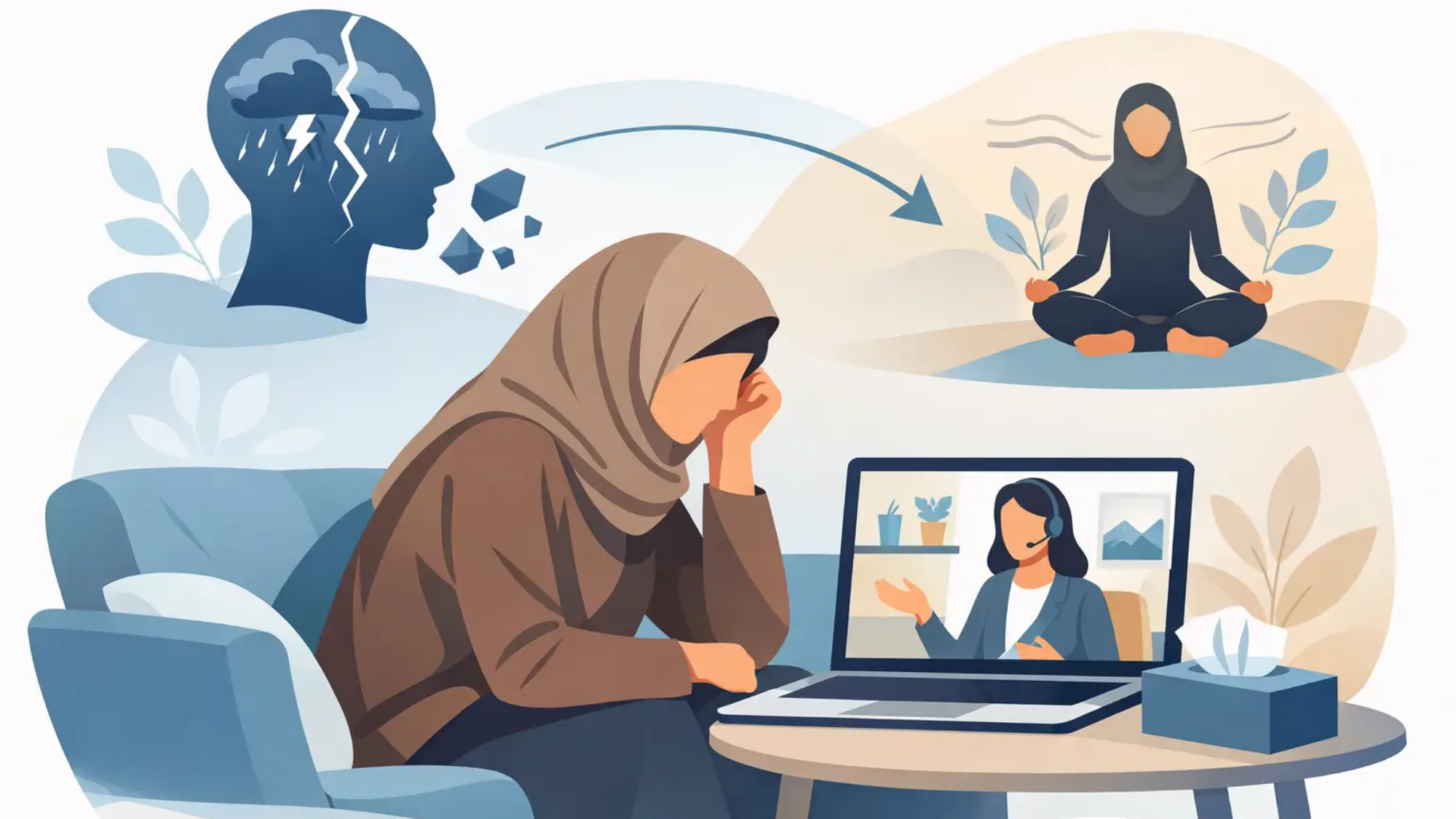
Some wounds do not stay politely in the past. They show up when you try to sleep, when a familiar tone of voice changes your body, when closeness feels unsafe, or when you are doing everything expected of you while carrying a private storm. Online intensive trauma therapy offers a more focused path for Muslim women who are tired of surviving around their pain and are ready to meet it with care, skill, and faith.
Trauma treatment does not ask you to erase your story or become someone untouched by what happened. It helps your nervous system learn that the danger is not occurring now. It helps you recover choice, steadiness, and connection to the life Allah has entrusted to you.
What Online Intensive Trauma Therapy Means
An intensive is not simply regular therapy compressed into a longer appointment. It is a structured, clinically intentional treatment format that gives trauma work more protected time and continuity. Rather than spending many sessions slowly arriving at the central wound and then having to pause, an intensive may offer extended sessions or several sessions scheduled close together.
This can be especially helpful when trauma symptoms are disrupting daily life. Perhaps you are experiencing panic, nightmares, shutdown, intrusive memories, chronic tension, emotional numbness, or a pattern of avoiding the people and places that matter to you. You may understand intellectually that you are safe, yet your body continues to respond as though it is not.
The purpose is not to force disclosure or rush healing. A well-designed intensive includes assessment, preparation, active trauma processing when appropriate, and integration. The pace should remain responsive to your capacity. More hours do not automatically mean better care. The quality of the therapeutic relationship, the clinical fit, and your readiness matter deeply.
Why Trauma Can Need More Than Weekly Support
Weekly therapy can be meaningful and effective. For many women, it is the right rhythm because it creates space to practice skills, tend to family or work responsibilities, and process emotions gradually. But there are seasons when an hour a week feels too fragmented for the depth of what you are carrying.
A concentrated format can reduce the stop-and-start quality of treatment. It gives you time to settle into the work rather than using much of each session updating your therapist, regulating after a difficult week, and preparing to leave just as something important begins to emerge. With adequate structure, longer sessions can allow the mind and body to move through a fuller arc of preparation, processing, and grounding.
This does not mean an intensive is only for a crisis. It may fit a woman who has done years of insight-oriented therapy but still feels activated by a specific memory. It may support someone preparing for a major transition, such as marriage, motherhood, a move, or a return to family circumstances that bring old pain close again. It can also be a thoughtful option for women whose schedules or state residency make consistent weekly treatment difficult.
Faith-Integrated Care Is Not an Add-On
For a Muslim woman, trauma can affect more than mood and relationships. It can touch her relationship with salah, her experience of du’a, her ability to trust others, and even the way she understands herself before Allah. She may feel guilt for struggling, fear that her symptoms reflect weak iman, or shame about thoughts and reactions she did not choose.
These burdens deserve clinical care, not spiritual simplification. Sabr is not passive endurance of untreated suffering. Tawakkul does not require ignoring the body Allah created with its need for safety, rest, and support. Prayer can be a profound source of grounding, but it should never be used to dismiss flashbacks, dissociation, obsessive fear, or the effects of abuse and loss.
Faith-integrated trauma therapy makes room for the full truth. It recognizes that Islamic spiritual grounding can strengthen treatment while evidence-based therapy can help restore the capacity to engage in worship, relationships, and purposeful living. Your deen and your mental health are not competing commitments. They can be held together with dignity.
What Treatment May Include
The clinical approach should be based on your symptoms, history, goals, and current stability. Trauma is not one-size-fits-all, and neither is trauma treatment. Some women need to begin with nervous system regulation, boundaries, emotional literacy, or strategies for staying present before directly revisiting traumatic material.
EMDR may help the brain reprocess distressing memories so they no longer carry the same emotional charge. Cognitive Processing Therapy and Written Exposure Therapy can support women whose trauma has shaped painful beliefs such as, “It was my fault,” “I am permanently damaged,” or “I cannot trust anyone.” Internal Family Systems can help you approach protective parts of yourself with compassion rather than self-contempt.
Acceptance and Commitment Therapy, CBT, and DBT skills may be used to address avoidance, panic, depression, intense emotions, or the practical challenges of rebuilding a life after trauma. When intrusive thoughts and compulsions are present, Exposure and Response Prevention may be essential, particularly when OCD or waswasa has become entangled with fear, guilt, and certainty-seeking.
The method matters, but so does the meaning you make of the work. A faith-integrated clinician can understand that modesty, family dynamics, religious obligations, and spiritual language are not side notes in your life. They are part of the context in which healing must make sense.
What Virtual Trauma Intensives Require
Online care can be deeply personal and effective, but the setting needs thought. You need a private room where you can speak freely, a reliable internet connection, and a plan for what will help you regulate after the session. That may include water, a comforting sensory object, a short walk, a nourishing meal, or quiet time before returning to caregiving or work.
Privacy is particularly important for women living in multigenerational homes, shared spaces, or relationships where they do not feel fully free to speak. Headphones may help, but they are not always enough. Before beginning, consider whether you can protect the time and emotional space the work requires.
Your therapist should also discuss safety planning. If you are at immediate risk of harming yourself, are in an unsafe environment, or are experiencing severe dissociation without adequate support, an outpatient online intensive may not be the right level of care. In those situations, local crisis services, emergency support, or a higher level of treatment may be needed first. Choosing the appropriate care is not failure. It is wisdom.
How to Know Whether the Timing Is Right
Readiness does not mean feeling fearless. Many women begin trauma therapy while feeling apprehensive, ambivalent, or exhausted. More often, readiness means having enough stability to return to the present after difficult emotions arise and enough support to care for yourself between sessions.
Ask whether you have a specific concern you want to address, whether you can make space for recovery afterward, and whether you are willing to practice the grounding or reflection your therapist recommends. Consider your current obligations honestly. An intensive can be powerful, but it can also be emotionally demanding. Scheduling it during a period of acute family conflict, final exams, a major deadline, or no available childcare may not serve you well.
It is also wise to ask how follow-up care will work. Some women benefit from a brief intensive followed by weekly sessions. Others use an intensive to begin treatment and then continue at a slower pace. Healing is rarely a single event. It is a process of building new responses, new boundaries, and a more merciful relationship with yourself.
A More Rooted Way Forward
Trauma may have taught your body to brace, your mind to scan for threat, or your heart to expect abandonment. Those patterns may have once helped you endure what should never have been placed on you. They are not proof that you are broken, difficult, or far from Allah’s mercy.
With skilled support, you can honor the part of you that survived while making room for the woman you are becoming: more present, more discerning, and more able to receive the good Allah places in your path. Healing does not require you to deny what happened. It invites you to carry your story with less fear and more freedom.
